Review · VENICE
Venice: Private Walking Tour with Optional Gondola Ride
Venice reveals itself best in its narrow calle, where a turn away from Saint Mark’s Square can put you beside a quiet courtyard or a curious old palace. This private or small-group walk leads you from the Correr Museum to La Fenice, the Bovolo Staircase, and Rialto Bridge while explaining how Venice became a trading power, then remained wonderfully medieval after new ocean routes changed the game.
I like the way the tour balances famous sights with lesser-seen corners, and I like the local details, including Venetian dialect and the practical problems of living in a city built on water. Guide Gianni receives specific praise for being well prepared and friendly. The main limitation is clear: you visit the sights from outside, and the optional gondola ride has no guide.
Key points to know before you book
- La Fenice anchors the walk: Learn how Venice’s famous opera house burned and was rebuilt in its original style.
- The Bovolo Staircase is easy to miss: This ornate spiral stairway sits in a small courtyard away from the main flow of Saint Mark’s visitors.
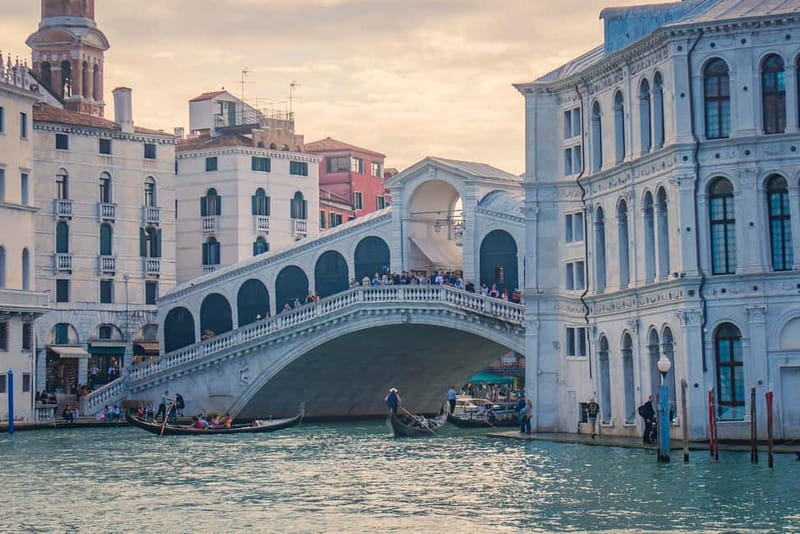
- Rialto gives you the big Venice view: The tour finishes its sightseeing portion at the bridge and Grand Canal.
- The route explains Venice, not just its monuments: Your guide covers trade, architecture, Venetian speech, and the city’s modern challenges.
- The gondola is a separate-feeling add-on: You get a 30-minute ride from Santa Maria del Giglio, but no commentary from a guide during the ride.
- It works best for walkers: Wear comfortable shoes, and do not bring oversize luggage. The activity is not suitable for wheelchair users.
From Correr Museum into Venice’s narrow calle
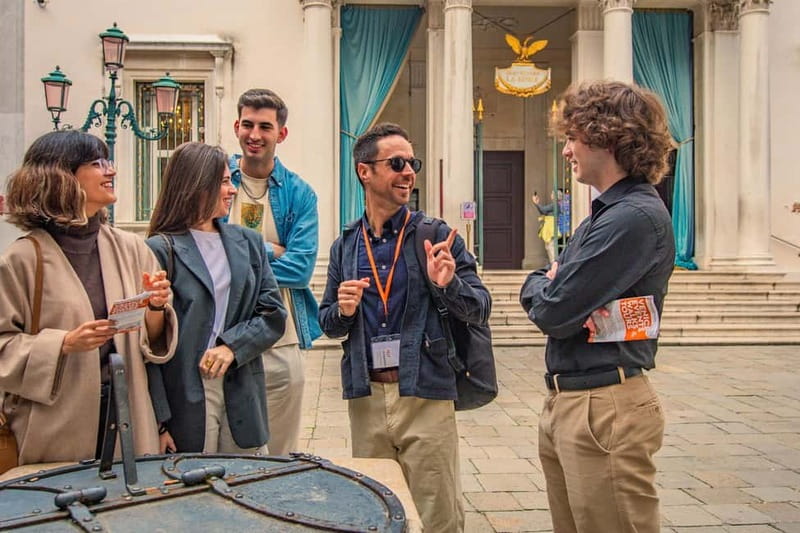
Your meeting point is beneath the arches of the Correr Museum on Saint Mark’s Square. Look for the assistant with an orange umbrella at the entrance to the square. This is a sensible place to begin because the square gives you an easy landmark, but it can be confusing when crowded, so allow time to find the correct arches.
If you arrive by vaporetto, take route 1 or 2 to Vallaresso. From there, walk along Calle Vallaresso, passing Harry’s Bar on your right and the Hotel Monaco and Grand Canal on your left. At the end, turn right toward Saint Mark’s Square. The Correr Museum is on the opposite side of the square from the basilica, under the arcades.
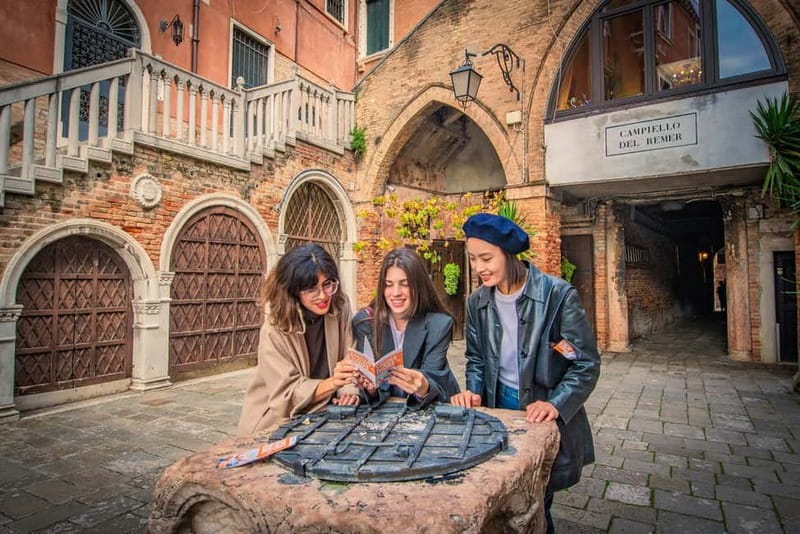
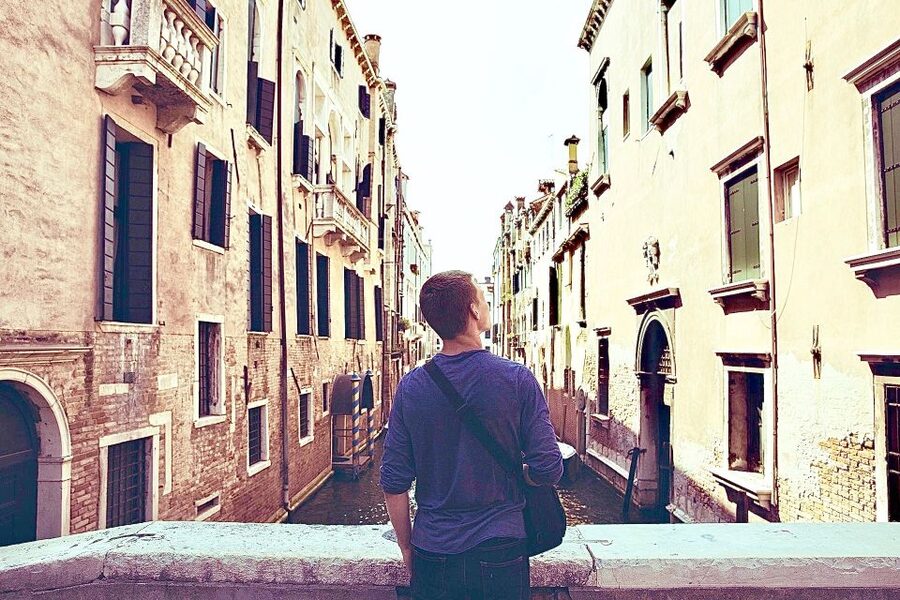
The walk then leaves the grand open space and enters Venice’s maze of lanes. This change is part of the point. Saint Mark’s Square gives you the postcard view, but the narrow streets show how the city actually works. You pass through calle, small passages, and tucked-away courtyards while your guide explains the city’s unusual design.
I appreciate that the tour does not treat Venice as a collection of isolated monuments. You hear why buildings were constructed in particular ways and how water, trade, and limited space shaped daily life. Venice can look impractical to modern eyes, and the guide helps explain why this strange arrangement survived.
More Gondola Rides with a Walking Tour in Venice:
- Venice Walking Tour and Gondola Ride
★ 3.5 · 3,630 reviews - Venice: City Center Walking Tour & Iconic Gondola Ride
★ 4.3 · 500 reviews - Venice: Walking Tour and Shared Gondola Ride
★ 4.1 · 466 reviews
La Fenice and the story of a rebuilt opera house
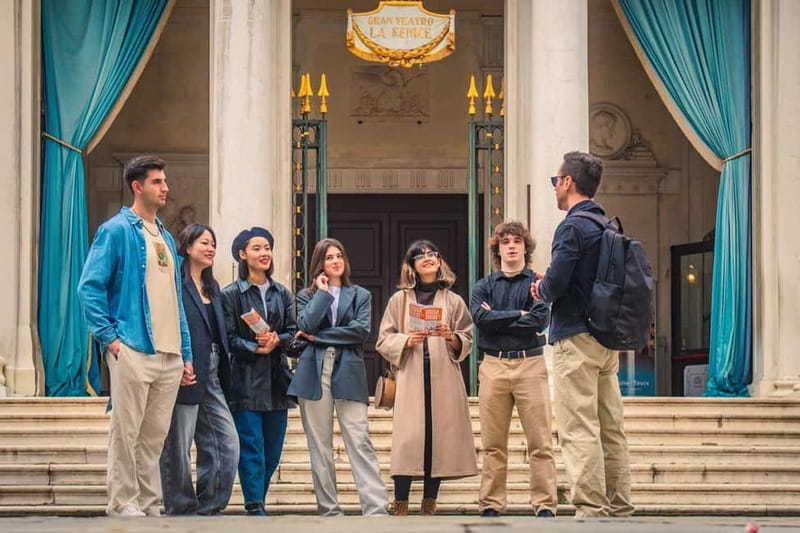
Teatro La Fenice is one of the major stops. From the outside, you can appreciate its place in the city and hear the story of its destruction by fire and rebuilding in its original glory.
The name La Fenice means the phoenix, which makes the rebuilding story especially fitting. The tour focuses on the exterior, so you should not expect a performance, museum entry, or interior tour. Still, the stop has value because it connects Venice’s artistic life with the wider story of the city.
A good guide can turn a façade into a useful history lesson. Here, the discussion reaches beyond opera. You learn how Venice cultivated grandeur in a city that had limited land and depended heavily on maritime trade. The building becomes a way to understand Venetian taste, public life, and the city’s desire to restore its past.
The pace is also helpful. You are not rushing through a long list of interiors. Instead, you stop, listen, and then continue through the lanes. The walk lasts about two hours, though the full activity may run 2 to 2.5 hours depending on the option and schedule.
Palazzo Fortuny and Venice’s quieter architectural details
The route continues toward Palazzo Fortuny, once known as the Palace of the Orpheans. This is one of the places where the tour’s slower approach pays off. You are not simply being taken from one famous landmark to another. You are being shown how Venice’s palaces and smaller architectural details fit into the city’s story.
The route also brings in Marco Polo’s house area and other points of interest. The supplied details do not promise an interior visit or a preserved home you can enter, so treat this as a historical reference along the walk rather than a museum stop.
That distinction matters. Venice is full of places associated with famous names, but the pleasure often comes from seeing how they sit within the city’s tight street plan. A local guide can point out the relationship between a passage, a courtyard, a canal, and a palace in a way that a self-guided map may miss.
You also hear about Venice losing trade routes after the discovery of the New World. That change helps explain why so much of Venice feels suspended in an earlier age. The city remained important, but the great commercial routes shifted elsewhere. The result is a place where medieval planning, grand palaces, and modern tourism exist side by side.
The Bovolo Staircase, a small stop with a big payoff
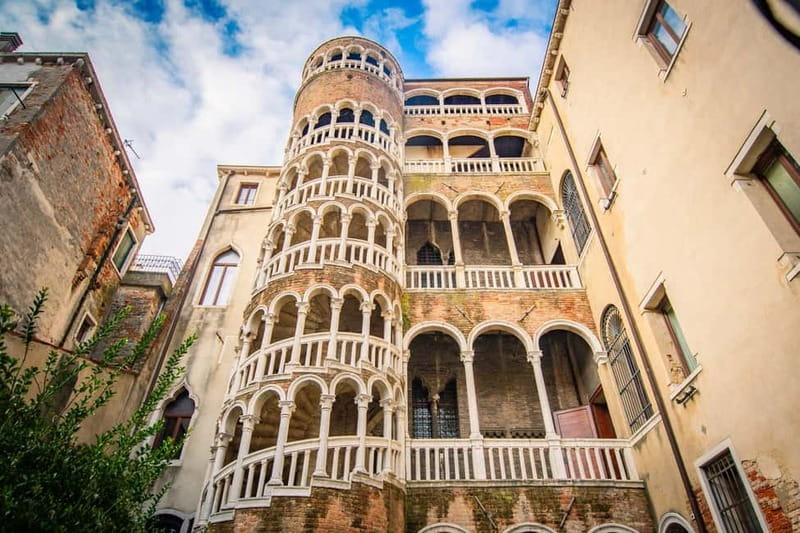
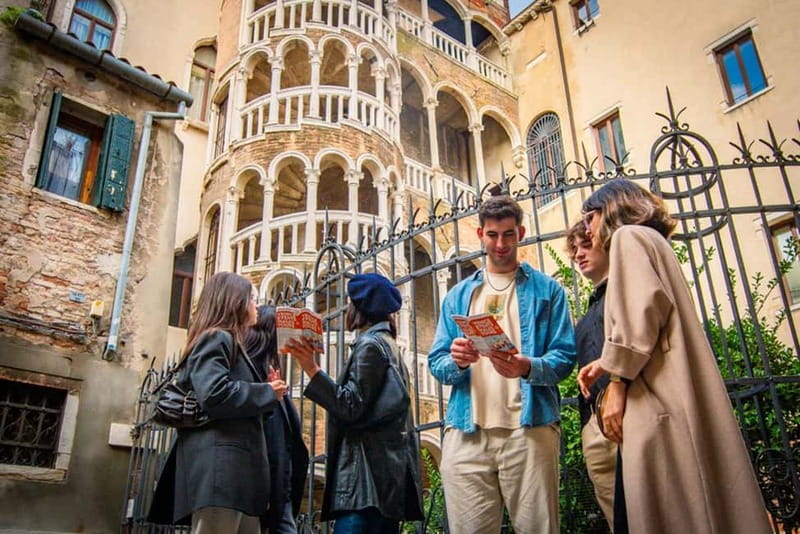
Palazzo Contarini del Bovolo is probably the most distinctive stop on this route. The ornate spiral staircase is known as the snail because of its curved form. It sits in a tiny courtyard, easy to miss if you do not know where to look.
This is exactly the sort of stop I want on a Venice walking tour. It is specific, visually unusual, and tucked away from the most obvious route between Saint Mark’s Square and Rialto. You get a memorable piece of architecture without spending the whole morning in a major attraction.
Again, the visit is external. The activity does not include entry to museums or attractions, so you should not expect to climb the staircase. That may disappoint anyone who wants an indoor architectural tour, but the outside view still makes this a worthwhile pause.
The Bovolo stop also shows why a local guide matters in Venice. Without help, you might walk within a few streets of the staircase and never notice the entrance. The guide gives the structure a name, a setting, and a reason to remember it.
More Private Gondola Rides in Venice:
- Venice: Private Gondola Cruise for up to 5 Passengers
★ 3.7 · 3,106 reviews - Venice: Private Crafted Gondola Ride Along Grand Canal
★ 3.8 · 2,854 reviews - Venice: Private Gondola Ride
★ 3.6 · 757 reviews - Venice: Off the Beaten Path Private Gondola Ride
★ 4.3 · 703 reviews
Rialto Bridge and the Grand Canal viewpoint
The walk heads toward Rialto Bridge, one of Venice’s most famous sights. Here you get the broad canal view that balances the tighter lanes earlier in the tour. After spending time in small passages, the Grand Canal feels wide, busy, and theatrical.
Your guide discusses the bridge and the surrounding area from the outside. The stop is good for photographs and for seeing how Venice’s main waterway connects the city. You also get a clearer sense of the difference between Venice’s intimate side streets and its major public routes.
Rialto is not a quiet stop. Even a tour designed to avoid the main crowds must eventually meet the city’s busiest landmarks. Expect more people here than around the Bovolo Staircase or the quieter lanes. The benefit is that your guide helps put the scene in context instead of leaving you to take a quick photograph and move on.
The tour ends back at the original meeting point, with drop-off information also listing Campiello Traghetto. Confirm the exact end point with the operator on the day, especially if you have a reservation or transport connection afterward.
What the guide adds to a city that can be confusing
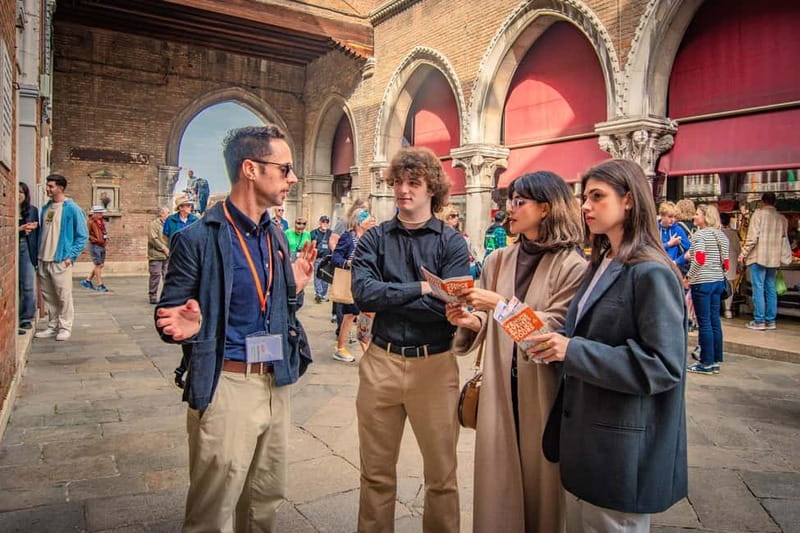
Venice is not difficult because it lacks things to see. It is difficult because the city can feel like a puzzle. A private or small-group guide gives you a practical way through that puzzle and lets you ask questions as they come up.
The guide covers Venetian dialect along with history and architecture. That detail adds local character. You are not only hearing dates and famous names. You are getting a sense of how Venice sounds and how its residents describe their city.
The strongest part of this experience is the combination of broad context and small observations. You learn about trade routes and the city’s struggle with modern practical problems, then stop at a spiral staircase in a courtyard. That mix keeps the walk from becoming either a dry lecture or a rushed checklist.
Guide quality remains important. The available information specifically identifies Gianni as a prepared and fantastic guide, but guide assignment can vary. The activity is offered in English, Spanish, French, German, and Italian, so check the language when you book.
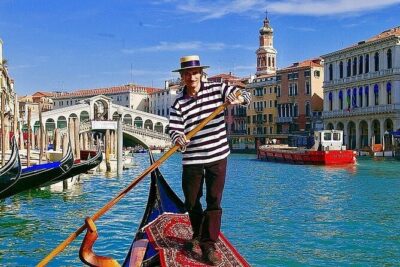
Adding the 30-minute gondola ride at Santa Maria del Giglio
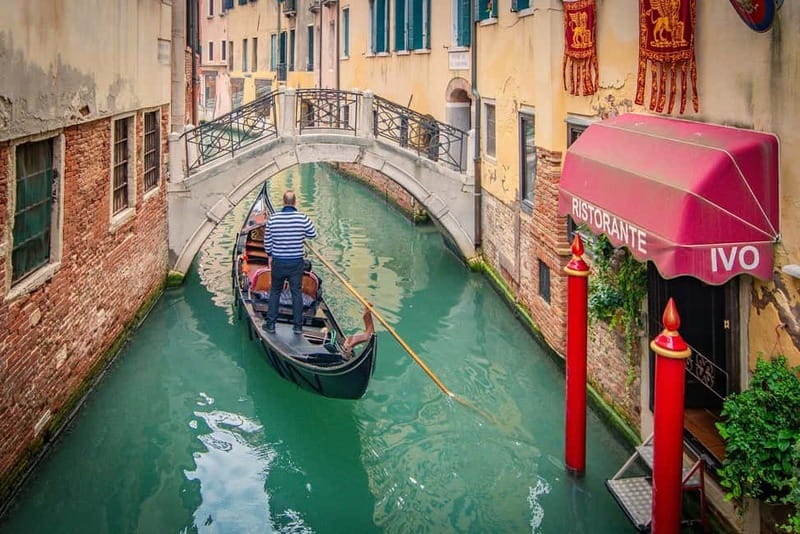
You can add a 30-minute gondola ride from the station at Santa Maria del Giglio, near the Gritti Palace Hotel. This offers a different view of Venice after the walking route. From the water, the city’s walls, bridges, and canal entrances take on a different shape.
The gondola ride is for relaxation rather than instruction. It does not include a guide, so do not book the add-on expecting a second narrated tour. If you want historical explanations during every part of the experience, the walking section is the stronger choice.
I see the gondola option as a good fit if you want the classic Venice experience but prefer to avoid organizing a separate ride. It also gives you a chance to rest after walking for about two hours. On the other hand, if your budget is tight or you already plan a gondola ride elsewhere, the walking-only version gives you the core value.
Check the exact timing when you select the option. The activity is described as lasting 2 to 2.5 hours, while the gondola portion itself lasts 30 minutes. Starting times vary, and the gondola does not function as a guided extension of the walking tour.
Is $150.10 per person a fair price?
At $150.10 per person, this is not a bargain-priced orientation walk. The value depends heavily on whether you receive a truly private experience or join a small group, and on whether the gondola option is included in the price you see for your chosen booking.
For a first visit to Venice, the price can make sense if you want personal attention, help finding the Bovolo Staircase, and a clear explanation of how the city fits together. A private guide is especially useful if you have questions about architecture, trade, or daily life and do not want to follow a large group.
The walking-only version is easier to justify for someone who values local interpretation more than museum entry. You visit several important sights from outside, but there are no included interior admissions. If you want to tour La Fenice inside or spend time in museums, you will need separate plans.
The optional gondola ride adds classic atmosphere, but remember that it is only 30 minutes and has no guide. I would compare the total price with the cost of arranging a separate gondola ride before booking the upgrade.
Free cancellation up to 24 hours before the activity and the reserve-now, pay-later option help if your Venice schedule is still moving around. Those policies are useful, but they do not change the basic question: are you paying for a guided understanding of Venice, or mainly for transport and sightseeing? This experience is strongest in the first category.
Who should choose this Venice walk?
I would recommend it to a first-time visitor who wants a quick but meaningful introduction to Venice. The route covers Saint Mark’s Square, La Fenice, the Bovolo Staircase, Rialto Bridge, and several less obvious passages without requiring a full day.
It also suits you if you enjoy architecture and city stories more than indoor collections. The guide explains why buildings look as they do, how Venice’s trade changed, and what makes the city hard to maintain. That context can improve the rest of your stay.
The experience may also work well for couples or families who prefer a private pace. You can ask questions and avoid the feel of a large group. Language choices add flexibility.
I would hesitate if you need step-free access, since the activity is not suitable for wheelchair users. I would also look elsewhere if your main goal is entering attractions. This route is an exterior walking tour, not a museum pass or an opera-house visit.
Comfortable shoes are essential. Venice’s narrow streets and bridges make poor footwear a needless nuisance. Leave oversize luggage behind, too.
Should you book this private Venice tour?
Book it if you want a guide to connect Venice’s famous sights with its quieter lanes. The Bovolo Staircase, La Fenice story, Rialto views, Venetian dialect, and trade history give the walk more substance than a simple photo stop.
Choose the gondola upgrade if you want a short, relaxing canal ride and understand that it comes without a guide. Skip it if you already have a gondola planned or prefer to spend your budget on interior visits.
My call: this is a strong choice for a first Venice visit, especially in a private or small-group format. It offers useful orientation, specific architectural stops, and a look at the city’s less obvious side. Just book it for the guided walk, not for museum access or a narrated gondola cruise.
FAQ
Where does the walking tour start?
It starts under the arches of the Correr Museum on Saint Mark’s Square. An assistant holds an orange umbrella near the entrance to the square.
How long does the activity last?
The activity lasts about 2 to 2.5 hours. Check the selected booking option for the available starting times.
What sights are included?
The route includes an external visit to Teatro La Fenice, Palazzo Contarini del Bovolo and its spiral staircase, Rialto Bridge, the Grand Canal viewpoint, Palazzo Fortuny, and the area associated with Marco Polo’s house.
Can I enter La Fenice or other attractions?
No. The activity does not include inside visits to museums or attractions. The listed sights are visited from outside.
Is the gondola ride included?
A 30-minute gondola ride is available if you book that option. It departs from the gondola station at Santa Maria del Giglio near the Gritti Palace Hotel.
Does the gondola ride include a guide?
No. The gondola ride does not include a guide.
What should I bring, and who cannot join?
Bring comfortable shoes and do not bring oversize luggage. The activity is not suitable for wheelchair users.
Recently added gondolas around Venice
- Venice: Vip Semi-Private Walking Tour with Gondola Ride★ 4.5 · 17 reviews
- Venice: Walking Tour & Gondola Ride★ 4.4 · 22 reviews
- Venice: Romantic Palace Dinner and Private Gondola Ride★ 4.7 · 6 reviews
- Venice: St. Mark’s Basilica Guided Tour and Gondola Ride★ 4.5 · 2 reviews
- Venice: Private Photoshoot In Gondola★ 5.0 · 13 reviews
- Venice: Private Tour with Doge’s Palace, St. Mark’s, Gondola★ 5.0 · 7 reviews
- Private Venice Walking Tour and Gondola Ride★ 4.3 · 3 reviews
- Venice: Highlights with Local Private Walking Tour & Gondola★ 4.5 · 10 reviews
Gondola Rides with a Walking Tour, side by side.
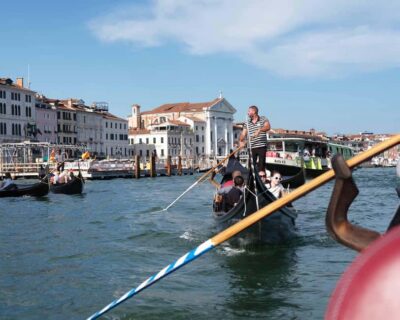
Venice: City Center Walking Tour & Iconic Gondola Ride
Read our review →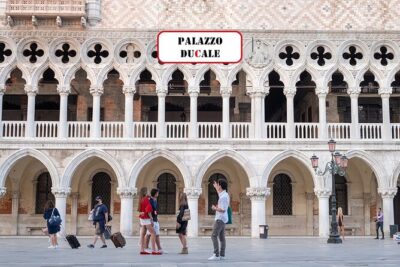
Unusual Venice Walking Tour through Rialto & Gondola Experience
Read our review →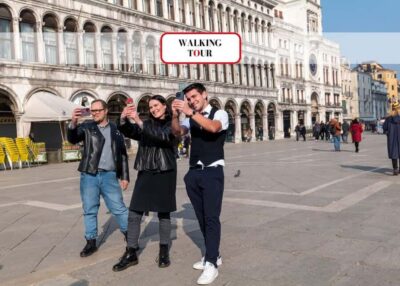
Venice: St Mark’s Square & Rialto Walking Tour & Gondola
Read our review →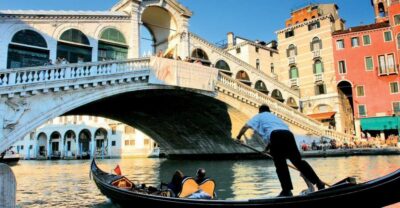
Venice: St. Mark’s, Walking Tour and Gondola Combo
Read our review →
Venice Highlights with Local: Private Walking Tour & Gondola Ride
Read our review →